Cooling with the air-to-water heat pump
Imagine coming home on a hot summer day – and your house is pleasantly cool. All without air conditioning. Heating and cooling with a single system makes it possible – for your future-proof home
Imagine coming home on a hot summer day – and your house is pleasantly cool. All without air conditioning. Heating and cooling with a single system makes it possible – for your future-proof home
exciting to read
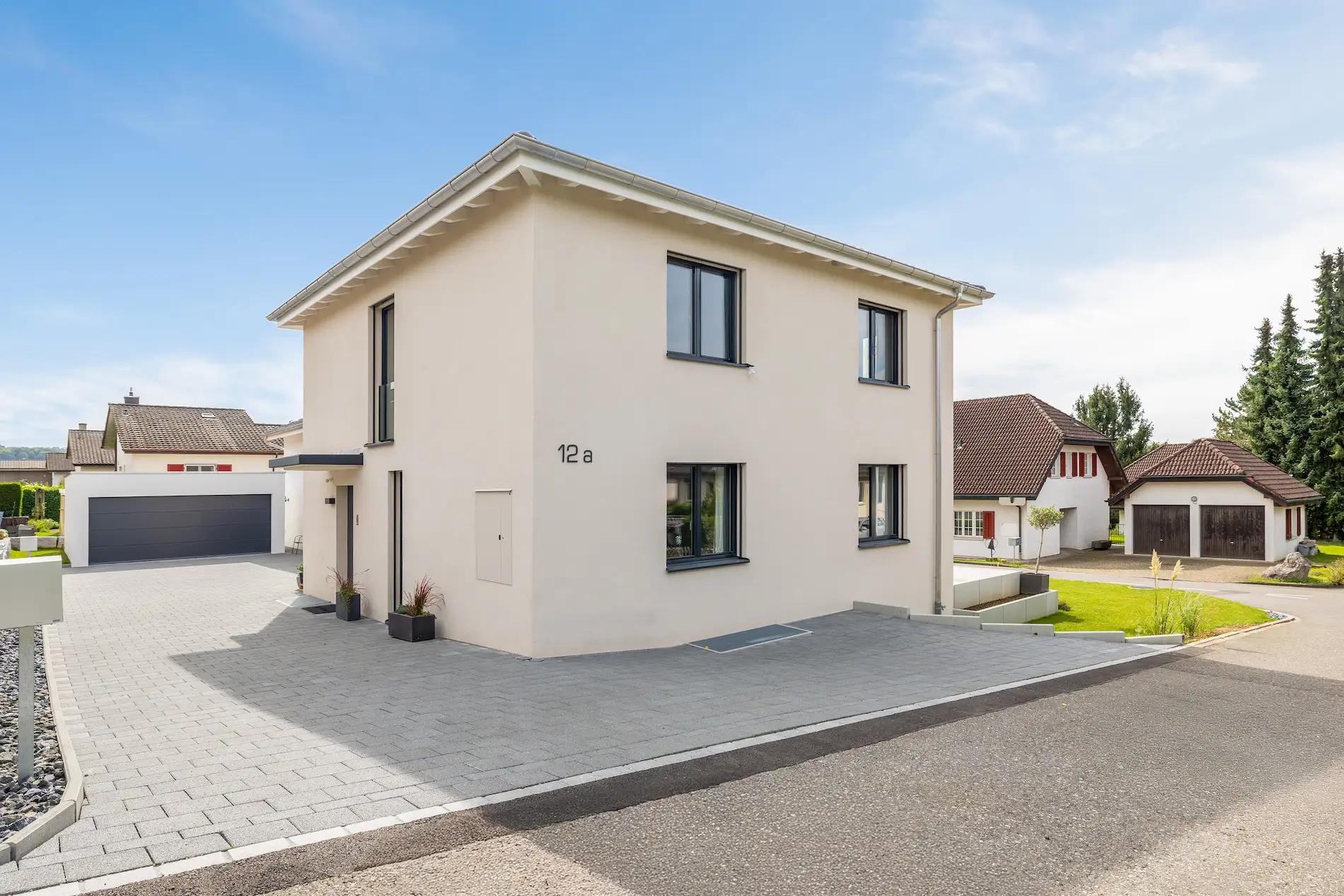
No humming, no energy guzzlers, no guilty conscience. Instead: a quiet technology that efficiently heats your home in winter – and cools it for free in summer. Sounds like the future? It is. And it starts right now – with your planning.
If you're considering building your own home – or are perhaps already in the planning phase – you're probably facing the question: How can I heat sustainably without later regretting high operating costs? And: Is there a solution that also provides cooling in the summer – without having to rely on a traditional air conditioner?
This is where the combination of an air-to-water heat pump and free cooling into play. The sustainable heat pump is installed as standard in every Atmoshaus . Many people are familiar with heat pumps, but few know that – when properly equipped – they also offer real added value and a comfortable living environment in the summer. This is precisely what inspires many prospective homeowners to take the next step.
As an experienced general contractor in the planning and implementation of energy-efficient single-family homes, we know what matters – and why this technology is the trigger for many building owners to tackle a project in concrete terms.
This article will tell you:
An air-to-water heat pump sounds technical at first glance – but in reality it's a pretty ingenious principle that simply works: It uses the ambient air to heat your house and produce hot water.
Instead of burning fossil fuels like oil or gas, the heat pump draws energy from the outside air – even in sub-zero temperatures during winter. This energy is raised to a usable temperature level via a refrigerant and a compression process and fed into the heating system.
Hence the name "air-water": air as an energy source, water as a heat transfer medium in the heating system.
This means for you:
Air-to-water heat pumps are particularly popular for new single-family homesbecause they are easy to integrate, require little space and operate very efficiently – especially in combination with underfloor heating.
When you think about cooling in the summer, you might immediately picture an air conditioner: loud, energy-hungry, and expensive to run. But with a modern air-to-water heat pump, there's another way – and above all, a much more efficient one.
"Free cooling" means: free cooling using existing technology. And this is how it works:
While a heat pump brings heat from the outside air into the house in winter, it can do the opposite: The excess heat inside the house is dissipated to the outside via the heating system – for example, underfloor heating. This happens without active compressor operation, meaning almost no additional electricity consumption.
👉 The technology uses the cooler night temperatures or the temperature difference to the ambient air to naturally regulate the temperature of your house.
🔄 Why this powerful combination is particularly worthwhile in new construction
The air-to-water heat pump provides cozy warmth in winter – free cooling ensures pleasant temperatures in summer. Together, they create a sophisticated system that offers year-round living comfort – with just a single unit.
Especially in new buildings, it pays to plan for free cooling from the very beginning. Because:
👉 The additional initial costs are only around CHF 6,000 if the system is integrated directly during construction – significantly cheaper than retrofitting cooling.
Your advantages at a glance:
Year-round comfort without separate air conditioning
Minimal additional costs for integration into new buildings
Ideal for well-insulated buildings – prevents summer overheating
Sustainable, quiet and low-maintenance.
«skdjf skdjfl wei, woeijfdwolef kdfjl weoifjweoif, weoirfujoiewf udnj soijfoiwsjdf.»
David Meyer, CEO
From an economic perspective , investing in an air-to-water heat pump with free cooling not only pays off through lower running costs – it also increases the value of your property and reduces your dependence on energy price fluctuations.
Conclusion: For whom is this solution ideal – and what is your next step?
If you're planning a home that's comfortable, energy-efficient, and future-proof , then the combination of an air-to-water heat pump and free cooling the perfect choice. You'll benefit from year-round comfort, low operating costs, and increased sustainability – without having to forgo modern technology.
And perhaps this system is exactly the final pushyou needed to take the step from dream to construction project.
👉 Let's find out togetherif this solution is right for your house – and how we can best implement your construction project.
Request a free consultation now.
Do you have questions about this topic or would you like a personal assessment? Our experts are happy to assist you.



Free information package
Receive our initial information directly to your home